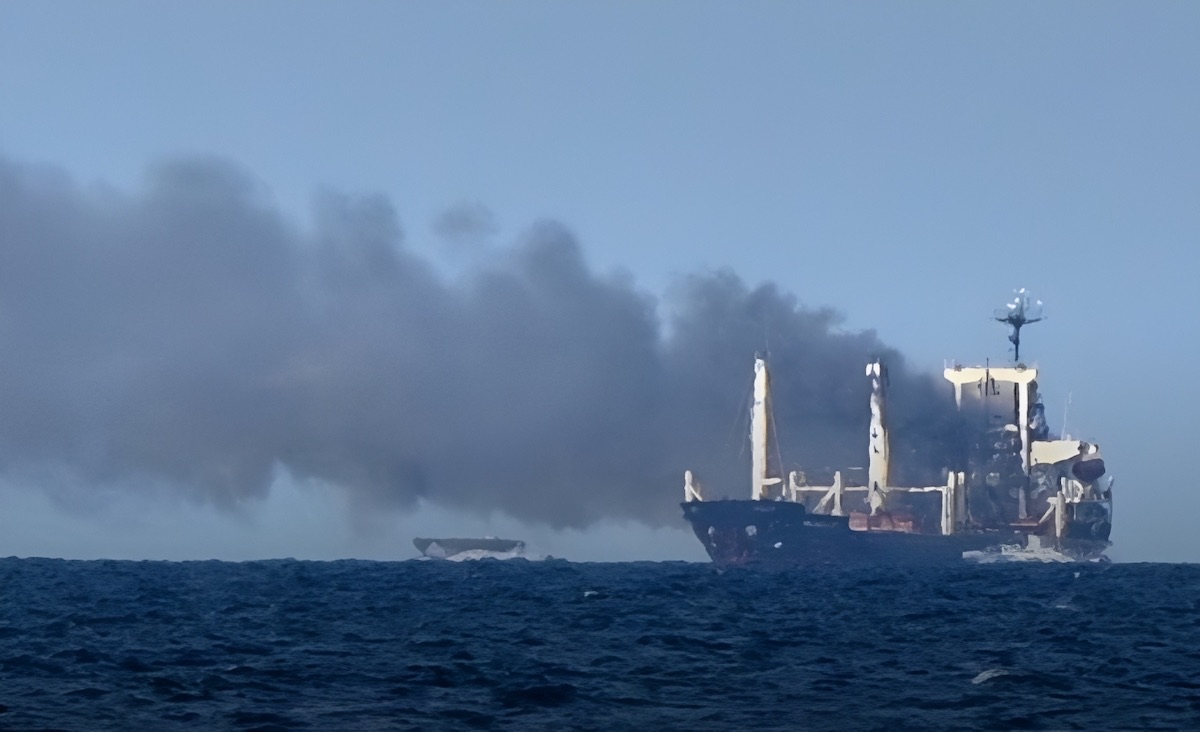
Since 22 July container lines have stopped calling at the ports of Greater Odesa. Cargo that was due to arrive in Odesa is now discharged in Constanța and taken into Ukraine by land. If your container is already under way, it will most likely be rerouted. And without changes to the bill of lading it will not be released to you. You have to act immediately, not when the vessel has already arrived.
The full rerouting procedure to Constanța + a 48-hour checklist
4 amendments to the bill of lading, charges in Constanța, queues at Orlivka, onward delivery by road or rail. Leave your contact — we’ll send the PDF and, if needed, go through your case.
What happened to the ports of Greater Odesa
First the exact wording, because there is a lot of confusion around this. The ports have not been closed. Legally Odesa, Chornomorsk and Pivdennyi are working. What stopped is precisely the port calls — the lines stopped sending their vessels there. The Ministry of Infrastructure separately denied rumours about the “closure” of Chornomorsk.
For you the difference is simple. The terminal is open, but the vessel with your container will not go there — in practice the cargo will arrive in Constanța.
And the context that explains the sharpness: the container service to Greater Odesa was thin even before July. After 2022 container imports recovered far worse than bulk.
| Year | Containers, TEU | Total throughput |
|---|---|---|
| 2021 (pre-war) | 1 021 621 | 153.3M t |
| 2024 | 129 902 | 97.2M t (~63% of pre-war) |
| 2025 | 215,748 (~21% of pre-war) | — |
| Q1 2026 | over 63,000 (+43% year on year) | — |
Swipe the table sideways →
The segment was thin but growing — Q1 2026 gave +43%.
Why Maersk, CMA CGM and MSC gave up on Odesa
The lines pulled out one after another: first Maersk, then CMA CGM, then MSC. Three reasons, all simple.
- A direct threat to vessels. In the first two weeks of July — 23 strikes on port infrastructure and attacks on 17 civilian vessels. For a line, a vessel worth tens of millions is a risk it will not take.
- Crews refuse. Seafarers do not want to enter a shelling zone, and that is their right. No crew — no sailing.
- Complications with insurance. Here I put it carefully: war risk cover has not disappeared, a policy can be found. But it has become harder and more expensive, and together with the two previous points the maths for the line does not add up.
Why a container is easier to reroute than bulk
There is an important nuance here that often gets confused. The ones hit hardest by the stop in port calls are not containers but bulk — grain, coal, metal. These are large volumes of low-margin products, very sensitive to logistics costs. When such cargo is moved onto land corridors and the Danube, the rise in delivery cost eats the margin. And from 1 August Ukrzaliznytsia raised tariffs by 30% — and that hits precisely the bulk that travels mostly by rail.
A container is more flexible in this sense. The margin per unit is higher, so it takes the extra land leg from Constanța better. And physically it is simpler to reroute: the container is put on a truck or a platform and moved on.
That does not mean it is painless for you. Your cargo will travel longer and cost more. But it will travel — unlike bulk, whose economics on land often simply do not add up.
Your container has been rerouted — what to do first
The main rule: in Constanța the cargo will be released only after the bill of lading is amended. While the document says Odesa, the cargo is tied to Odesa, and in Romania it will not be given to you.
The second rule: act immediately after the news of the rerouting. Not when the vessel is already in Constanța. Every day of delay means storage at the terminal and demurrage on the container. While you get going, the invoice grows by itself.
That is how we run it: as soon as the line announces the change of port, on that same day we prepare the amendments to the bill of lading and arrange the reception in Constanța, so that the container does not stand idle.
Changing the port of discharge in the bill of lading: what exactly is amended
Romanian customs require four amendments to the bill of lading. Each one matters — without any of them the cargo will not be released in Constanța.
| What is amended | Why |
|---|---|
| Port of discharge → Constanța | otherwise the cargo is tied to Odesa and is not released |
| A transit remark | records that the cargo continues into Ukraine by land |
| The forwarder’s note in the “consignee” field | if your forwarder is not the direct consignee, their note is placed before the company name |
| The house bill of lading number in the master one | links the house B/L to the master bill of lading for Romanian customs |
Swipe the table sideways →
The whole procedure takes on average up to 4–5 working days — which is why it has to be started the moment you learn about the rerouting, not when the vessel is already in Constanța. The exact wording differs between lines — Maersk, MSC and CMA CGM formalise it differently. Take it from your agent or the party organising the transport, not from a template on the internet: one wrong word in the remark and the container stands still again.
Delivery via Constanța into Ukraine: customs clearance and onward transport
Next the cargo has to be brought from Romania into Ukraine. There are two main routes — by road across the land border or by barge to the Danube ports, Reni and Izmail. But military risks on the Danube are high too, so there is no perfectly safe route — we weigh each option for the specific cargo and moment.
Customs clearance and onward delivery are on the consignee. You need a local Romanian broker to clear the cargo on the way out of Constanța. A broker found in advance saves you days of idle time.
Budget for the leg in advance. Constanța–Ukraine is separate money and separate timing that direct sea delivery to Odesa did not have. Build them into your cost before the vessel arrives, not after.
Ask straight away for the invoices for handling and local charges in Constanța. The line does not change the freight amount when rerouting, but port charges in Constanța differ from Odesa and Chornomorsk — and most often upwards. Check the exact figures with each line separately.
Storage, demurrage and detention in Constanța are different. There are fewer free days than in Ukraine, and the rates are higher. So you have to act fast and take the container out without delay, otherwise the invoice grows faster than you are used to.
Why this is for the long haul
Even when the port calls resume, it will not get cheaper and faster straight away. The chain is as follows.
Bulk has moved onto land corridors. Longer legs mean more trucks in circulation for the same tonne. At the same time mobilisation reduces the number of drivers. The shortage of vehicles builds up over months.
The shortage of vessels adds to it. There is already a lack of free container ships on the market, and rerouting ties them up further — carriers are already raising rates, and that goes into the overall cost of delivery.
Compare with 2022–23: back then the Danube was working and road transport was easier. Now the load on road transport is higher and there are fewer vehicles. The estimate is simple: after stabilisation the lines bring services back within a few weeks, but repositioning empty containers and the return of tonnage keep the cost elevated for months more.
What to do if you are only planning a purchase
- Budget for the increase. The land leg from Romania is a new cost base, not a temporary surcharge for a week.
- Review your timings. The leg via Constanța is longer than direct Odesa. Give yourself a buffer in the plans you give your customer.
- Consider stock held abroad. This is an option for those for whom continuity of supply is critical, not universal advice. For some it pays off, for some it doesn’t — we calculate it for the specific business.
In brief
The ports are working, but vessels do not call at them. Your container goes to Constanța, and without changes to the bill of lading it will not be released. The main thing is to start acting on the day of the rerouting news, not on the day the vessel arrives.
A video where I go through the situation in more detail: