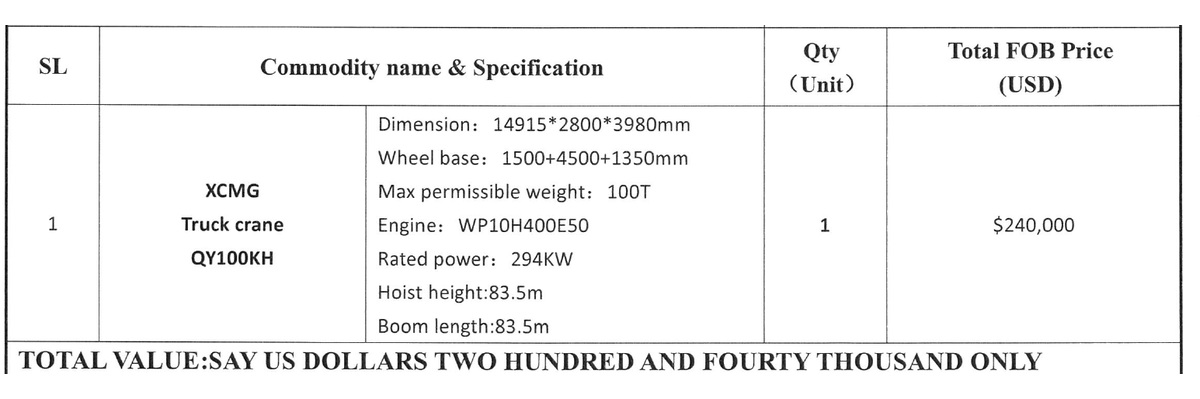
The short answer: four things are checked before the money moves — the legal entity in China’s state register, the match between the company name and the payment recipient, the physical existence of the plant, and the real availability of the goods on the market. If even two of them don’t line up, the payment is worth stopping. Below: 14 signals that expose the scheme in advance, a step-by-step checklist that takes an hour, and a case from our practice where exactly this check stopped a $240,000 payment.
The cheapest check there is
Ask them to let your trusted representative into the plant. If they refuse — for any reason at all — there is nothing left to check.
We have been shipping containers from China for six years and we see these stories from the logistics side: when the client has already paid and there is no cargo, or when there is cargo but not the one ordered. This article is about what to get done before the transfer.
A case from practice: the crane that did not exist
A client won a tender to supply a 100-tonne XCMG QY100KH truck crane from China. The purchase — $240 000. We were costing the logistics: a breakbulk vessel from Qingdao, loading into the hold, a road leg across Europe. A month of work.
When we proposed a supplier audit, the client declined. The wording was this: she works for a big company, they won’t cheat us, and besides she is doing us a favour by selling this crane at all.
Then the correspondence grew stranger. Pauses of several days on a simple question. Dodging a video from the yard. Refusal to send a photo with the serial number.
We asked them to let our surveyor into the plant. The answer: only after prepayment. $24,000 for the right to walk onto the site.
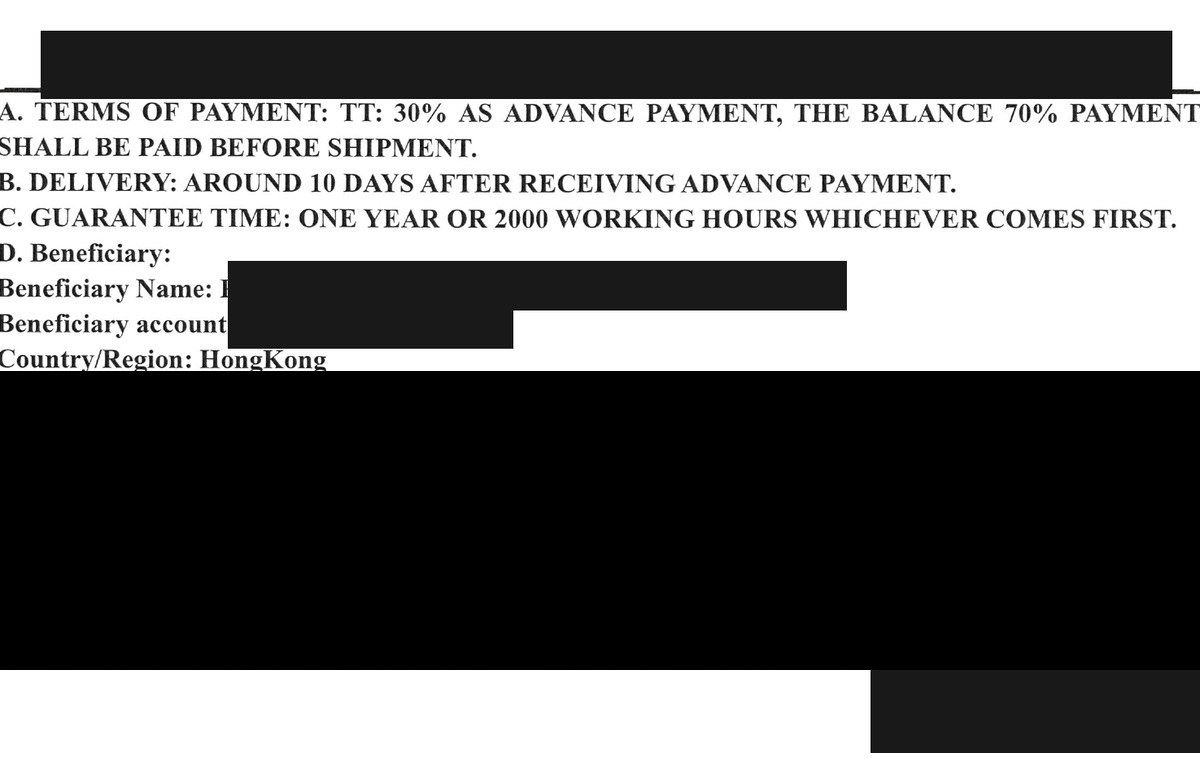
Then we looked at the invoice more closely. The company is registered in Shanghai, but the money is requested to an account in Hong Kong.
We stopped the payment. In parallel the client asked us to source a few more crane options — and that search is where everything came out. None of our suppliers had a QY100KH available. They were selling something nobody on the market had, yet “miraculously” one had turned up for this exact request.
While we were putting together an alternative, the seller stopped answering and blocked the contacts. The client paid nothing.
The payment terms in that proforma were exemplary — 30/70, exactly as they should be. So the best-known red flag, the demand for full prepayment, did not fire at all here. The other thirteen gave the scheme away.
Red flags at the introduction stage
1. They won’t let you into the plant
Refusing to let your trusted representative into the factory is the most reliable sign that there is no production at that address. The reason given can be anything: company policy, renovation, quarantine, a busy schedule. The result is the same. A real plant costs money, and its owner is glad to show it. Variations on the refusal: agreement only after prepayment, agreement only to a “showroom”, endless rescheduling of the visit.
2. The price is noticeably below market with no explanation
A price lower than a direct manufacturer’s means you are not talking to a manufacturer. A plant cannot go below a plant. Real production runs on a thin margin, not on miracles. If the price is lower even on large volumes, it is either different quality, or different material, or there are no goods at all. Logical explanations for a low price do exist: clearing stock, an old model, volume. But they are stated plainly and they check out.
3. A trading company posing as a manufacturer
A middleman calling itself a factory is not always a fraudster, but always a reason to check everything else. A trading company is a normal link in the market in itself; the trouble starts when you are lied to about it. The signs: generic workshop photos in the profile, no shots with equipment and people, and an inability to answer technical questions about the process.
4. They avoid a video call with a live date
A fake factory exists only online: stock photos of workshops and an invented address. You tell a recording from a live broadcast with one trick — ask for a video tour of the workshop right now, with today’s date said out loud. Refusing that call while happily showing “archive” footage is a signal.
5. The product photos are found at other companies
Fraudsters take product photos from real manufacturers. A reverse image search takes a minute. If the same photos sit on the sites of several unrelated companies, you are talking to a middleman or to a fraudster.
6. Nobody has the goods, yet here one “turned up”
After six years of working with China we consider this the most underrated signal. If a model is in shortage across the whole market, yet exactly one unit is found for your particular request, that is not luck — it is a test of your attention. Red-flag lists usually write about low prices; almost nobody writes about this one. It is verified with two calls to other suppliers.
Red flags in communication
7. Pauses and dodging specifics
A seller who really has the goods answers fast, because they want to sell. Long delays on simple questions, generic answers, no way to speak to a technical specialist — all of it costs them the deal, and they will accept that only when there is nothing to answer with.
8. Refusal to give a serial number or a photo of it
A serial number is the check that a specific unit exists. Refusing to send a photo of the nameplate for goods ready to ship has no normal explanation.
9. Certificates that cannot be verified
A scan of a certificate confirms nothing — only the report number in the laboratory’s database does. Copies of SGS, Intertek and TÜV reports get forged. The number and the date are checked directly with the laboratory that issued them. Signs of a forgery: the product name in the report does not match yours, the link does not work, there are no contacts for verification.
10. Pressure and manufactured urgency
The price holds until tomorrow, the production slot is the last one, the season is ending. A manufactured deadline in negotiations has exactly one function — to deny you the time to check.
Red flags in money and documents
This is the most important group. This is where the scheme gives itself away most often.
11. The account’s jurisdiction does not match the company’s
The company is registered in mainland China, but the payment is requested to Hong Kong, Taiwan or an offshore. In itself this can be lawful: some Chinese exporters work through a Hong Kong structure for currency reasons. The question is whether the name matches. If a Shenzhen company asks you to pay a Hong Kong company with the same name, that is normal and verifiable. If the name is different, or the Hong Kong company has no connection to the one you are corresponding with, the money is going to someone other than the party you contracted with. And if the seller disappears, you will be suing in another jurisdiction.
12. Bank details change mid-deal
A change of bank details between the quotation and the proforma is one of the most common schemes in settlements with China. Chinese companies rarely switch banks out of the blue. If the details in the proforma differ from those in the quotation, it is either supplier fraud or a mail compromise (Business Email Compromise), where the correspondence was intercepted and the details swapped.
What to do: confirm the change through another channel you have used before. Not the contact that arrived in the same email. Check the mail domain separately: if all the correspondence came from a corporate address and the “updated details” arrived from gmail or outlook — do not pay.
13. A personal account or a third party
Payment in the name of an individual for a commercial order has no lawful explanation in Chinese export. Beyond the risk of losing the money, you lose the fapiao, and the mismatch between the name on the invoice and the recipient’s name creates questions for your own tax accounting. A discount for paying into a personal account is mathematically unprofitable even before the risk is counted.
14. A demand for 100% prepayment
The standard practice in Chinese export settlements is 30% in advance and 70% against shipping documents or after inspection. A demand for full prepayment on a first order, with no escrow and no history together, strips you of every lever. But remember the example above: a normal 30/70 in the proforma still guarantees nothing.
How to check, step by step
- Step 1. The business licence. Ask for a scan of 营业执照. A legitimate manufacturer sends it without hesitation. The licence carries the unified social credit code — 18 characters.
- Step 2. The state register. Check the company in the National Enterprise Credit Information Publicity System — gsxt.gov.cn. Look at the registration date, the registered capital, the registered scope of business and the status. A shell company with no history and no capital shows up immediately. The site is in Chinese — a browser translator copes.
- Step 3. Matching the names. The Chinese legal name from the licence, the seller’s name in the contract, the invoice issuer, the payment recipient, the exporter in the documents. English names are translations and trade marks; you cannot anchor to them. The anchor is the Chinese name and the code.
- Step 4. Physical verification. A video call with a live date is the minimum. A visit by your trusted representative or an independent inspector is the norm for orders from a few tens of thousands of dollars up. A container loading inspection also gives you a recount of the goods before sealing.
- Step 5. Availability of the goods on the market. Two or three calls to other suppliers of the same model. The cheapest step — and the one that saved our client.
- Step 6. Payment terms. 30/70, payment to a corporate account, the recipient’s name matching the seller’s name. Any deviation is explained in writing and verified.
What to do if the money has already gone
Time decides everything. A cross-border dollar payment is usually credited in one to three business days.
- Go to your bank immediately with a request to recall the payment via SWIFT. Say plainly that you believe this is fraud.
- Record everything: screenshots of the correspondence, invoices, transfer confirmations, discrepancies in the bank details.
- If the payment went through a platform with trade assurance — open a dispute there as well.
- For significant sums — a lawyer in Chinese commercial law.
Money that has already landed in the beneficiary’s account in China is rarely recovered. So all the work happens before the transfer.
Checklist before payment
- Business licence received, 18-character code
- Company checked on gsxt.gov.cn: history, capital and a matching scope of business
- The Chinese name matches: licence = contract = invoice = payment recipient
- The account’s jurisdiction matches the company’s, or the connection is explained in writing
- The account is corporate, not personal
- The bank details have not changed since the quotation
- Payment terms are 30/70, not 100% in advance
- A video call from production with a live date has been made
- There is a photo of the goods with the serial number
- Availability of the model confirmed by two more sources
- Certificates verified with the laboratory that issued them
- Inspection agreed before shipment or at container loading
One unticked item is a reason to ask questions. Two or more are a reason to stop the payment.
Where a freight forwarder helps
We do not buy the goods for you and we are not a purchasing agent. But we see the documents: the invoice, the packing list, the bill of lading. A mismatch between the company name and the payment recipient, an odd account jurisdiction, a specification that does not match the market — all of it is visible at the stage where we are costing the freight.
If you are preparing a payment to a Chinese supplier right now and something in the documents looks off — send us the invoice and the specification. We’ll look at it together. And if you need more than an outside view — sourcing and vetting a factory, purchase included, or container shipping from China — that is our daily work.